

Connecticut Medicaid Lookback Rules and Planning
Credits Available
| Credit | Status | Total | Until |
|---|---|---|---|
| Connecticut CLE |
|
6 Total | 04-25-2027 |
| New York CLE |
|
7 Total | 04-25-2028 |


Buy This Course
OnDemand Video
Course Book Download
Overview
Make Certain Your Clients' Long Term Care Needs Are Met
The requirements for Medicaid eligibility are strict, and protective planning is tricky. How does your understanding of Medicaid planning stack up? Join us at this focused seminar to get the answers you need about this complex area of practice. Register today!
- Determine which assets are countable and how they can be converted.
- Establish exactly what limitations are placed on asset transfers.
- Protect your clients' interests by knowing what's exempt and what's not.
- Deepen your knowledge of transfer penalty provisions.
- Learn to effectively use trusts to plan for Medicaid without interfering with the overall estate plan.
Abbreviated Agenda
- The Lookback Period and Qualifying Asset Transfers Rule
- Asset Conversion From Non-Exempt to Exempt
- Irrevocable Trusts in Medicaid Planning
- Penalty Period for Improper Transfers
- Legal Ethics
- Case Studies and Common Client Scenarios
Credit Details
Credits Available
| Credit | Status | Total | Until |
|---|---|---|---|
| Connecticut CLE |
|
6 Total | 04-25-2027 |
| New York CLE |
|
7 Total | 04-25-2028 |
Credit Details by Jurisdiction
CLE
Credits
Connecticut CLE Approved · 6 Total Credits
- 1 Ethics/Professionalism
Earn Until
OnDemand - Connecticut CLE - 6: Neither the Connecticut Judicial Branch nor the Commission on Minimum Continuing Legal Education approve or accredit CLE providers or activities. It is the opinion of NBI, Inc. that this activity qualifies for up to 6.0 self-study hours toward your annual CLE requirement in Connecticut, including 1.0 self-study hour(s) of ethics/professionalism.
Video Download - Connecticut CLE - 6: Neither the Connecticut Judicial Branch nor the Commission on Minimum Continuing Legal Education approve or accredit CLE providers or activities. It is the opinion of NBI, Inc. that this activity qualifies for up to 6.0 self-study hours toward your annual CLE requirement in Connecticut, including 1.0 self-study hour(s) of ethics/professionalism.
New York CLE Approved · 7 Total Credits
- 6 Areas of Professional Practice
- 1 Ethics/Professionalism
Earn Until
OnDemand - New York CLE - 7: This nontraditional format course has been approved in accordance with the requirements of the New York State Continuing Legal Education Board for up to 7.0 credit hours. 6.0 hours can be applied to the areas of professional practice requirement and is approved for experienced attorneys. 1.0 hour can be applied toward the Ethics/Professionalism requirement and is approved for experienced attorneys. NBI, Inc. offers a Financial Hardship Policy for qualifying individuals. To apply, please submit a request via email to our Tuition Discount Committee at customerservice@nbi-sems.com.
Video Download - New York CLE - 7: This nontraditional format course has been approved in accordance with the requirements of the New York State Continuing Legal Education Board for up to 7.0 credit hours. 6.0 hours can be applied to the areas of professional practice requirement and is approved for experienced attorneys. 1.0 hour can be applied toward the Ethics/Professionalism requirement and is approved for experienced attorneys. NBI, Inc. offers a Financial Hardship Policy for qualifying individuals. To apply, please submit a request via email to our Tuition Discount Committee at customerservice@nbi-sems.com.
Select Jurisdiction
CLE
Agenda
-
The Lookback Period and Qualifying Asset Transfers Rule
- The Lookback Rule
- Gifts
- Intrafamily Loans
- Marital Deductions and Exceptions
- Reverse Half-Loaf with Medicaid-Compliant Annuity - Is it Still a Valid Approach?
- Transferring Real Property
-
Asset Conversion From Non-Exempt to Exempt
- Loan Repayment
- Exempt Asset Purchases
- Other Asset Conversion Techniques
-
Irrevocable Trusts in Medicaid Planning
-
Penalty Period for Improper Transfers
- Calculating the Penalty Period
- Preventing the Penalty Period
- Handling Unexpected Income to Protect Eligibility
- Partial Months of Ineligibility
- Monthly Maintenance Need Allowance (MMMNA) for Community Spouse
-
Legal Ethics
- Attorney Fees and Engagement Agreements
- Effective and Ethical Client Communication
- Protecting Client Confidentiality
- Conflicts of Interest When Representing Couples
-
Case Studies and Common Client Scenarios
Who Should Attend
This intermediate level online seminar addresses key questions involved in elder planning and is designed for:
- Attorneys
- Accountants
- Estate and Financial Planners
- Life Care Planners
- Paralegals
Speakers
Speaker bio
Stephen B. Keogh
is a partner in the Norwalk law firm of Keogh, Burkhart & Vetter, practicing primarily in elder law and probate law. A magna cum laude graduate of Yale College, Mr. Keogh earned his J.D. degree from Columbia University. He is a member of the Fairfield County, Connecticut and American bar associations, and the National Academy of Elder Law Attorneys. Mr. Keogh is a member of the Board of Directors of the Connecticut Chapter of the National Academy of Elder Law Attorneys, member of the Executive Committee of the Elder Law Section of the Connecticut Bar Association, and past co-chair of the Elder Law Section of the Fairfield County Bar Association. He is also a member of the Community Bioethics Forum, which is sponsored by the Program for Biomedical Ethics at the Yale School of Medicine. Mr. Keogh was the first recipient of the Glenn E. Knierim Pro Bono Award, given by the Connecticut Probate Assembly in April 2012.
Speaker bio
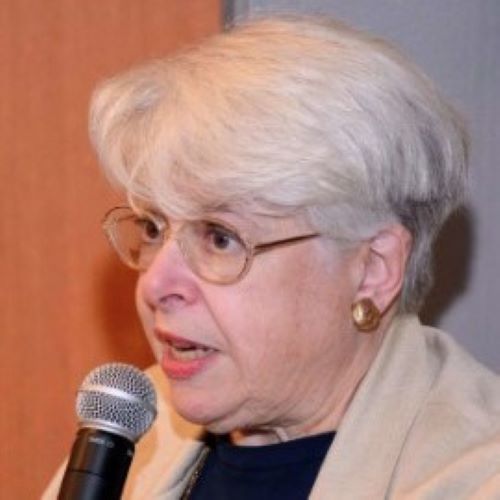
Jean Rabinow
is a sole proprietor at McMillan & Rabinow, where she practices probate and elder law, and prepares wills and related documents. Ms. Rabinow earned her bachelor's degree from Knox College in Galesburg and her J.D. degree from Yale Law School. She is admitted to practice law in Connecticut.
Speaker bio
Jacqueline M. Reardon
is the principal attorney of the Windsor, Connecticut law office of Jacqueline Reardon Attorney. Since 1990, her practice areas have included estate planning, special needs planning, probate, elder law and conservatorships. Ms. Reardon is a member of the National Association of Elder Law Attorneys (NAELA), American Bar Association and a member of PLAN of Connecticut. She earned her B.A. degree, magna cum laude, at Stonehill College and her J.D. degree, cum laude, at Suffolk University Law School.
TOP FAQs
Have more questions? Please Contact Us